Description
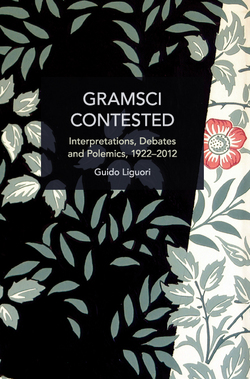
Gramsci's works, in particular his Prison Notebooks, are a real 'workshop' of activity. Even though these texts were the product of a great mind and an organic conception of the world, the particular context in which they are written poses challenges for their interpreters. Gramsci's Pathways is a philological 'excavation' of the pathways of Gramsci's thinking that brings us closer to an author who is more 'widely-known' than he is understood. The first part of the volume deals with central themes of Gramsci's worldview such as the concepts of the state, civil society, ideology, common sense, morality and conformism. The second part deals with Gramsci’s relations with thinkers as diverse as Machiavelli, Marx, Engels, Labriola, and Togliatti. Lastly, the third part offers some reflections on the metaphors used by Gramsci as well as contemporary views of the Sardinian Communist.
Author Bios
Guido Liguori is the president of the International Gramsci Society Italia. He has written numerous works on twentieth-century political thought and in particular Italian Marxism, and is the author of Gramsci conteso (Editori Riuniti, 2012). He jointly edited, together with Pasquale Voza, of the Dizionario gramsciano 1926-1937 (Carocci, 2009).
More Info
Publication date: February 14, 2017
Table of Contents
1. The Extended State
2. Civil Society
3. State, Nation, Mundialisation
4. Party and Movements
5. Ideologies and Conceptions of the World
6. Good Sense and Common Sense
7. Marx and Morality
8. Marx. From the Manifesto to the Notebooks
9. Engels’s Presence in the Prison Notebooks
10. Labriola: The Role of Ideology
11. Togliatti, the Interpreter and ‘Translator’
12. Hegemony and its Interpreters
13. Dewey, Gramsci and Cornel West
14. The Modern Prince
References
Index