Winner of the 2018 Lambda Literary Award for LGBTQ Nonfiction
“If Black women were free, it would mean that everyone else would have to be free.”
—Combahee River Collective Statement
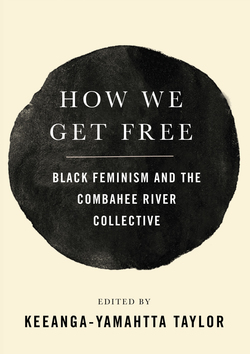
The Combahee River Collective, a pathbreaking group of radical Black feminists, was one of the most important organizations to develop out of the antiracist and women’s liberation movements of the 1960s and ’70s. In this collection of essays and interviews edited by activist-scholar Keeanga-Yamahtta Taylor, founding members and contemporary activists reflect on the organization’s contributions to Black feminism and its impact on today’s struggles.
This expanded second edition features a new introduction by Taylor and a powerful new interview with Angela Y. Davis.
Keeanga-Yamahtta Taylor writes and speaks on Black politics, social movements, and racial inequality in the United States.
She is author Race for Profit: How Banks and the Real Estate Industry Undermined Black Homeownership, published in 2019 by University of North Carolina Press. Race for Profit was a semi-finalist for the 2019 National Book Award and a finalist for the Pulitzer Prize in History in 2020. She is a 2021 MacArthur Foundation Fellow.
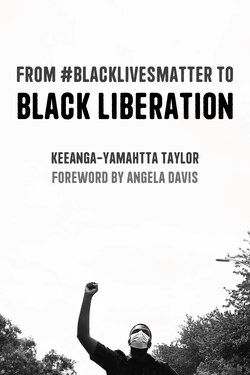
Her earlier book From #BlackLivesMatter to Black Liberation won the Lannan Cultural Freedom Award for an Especially Notable Book in 2016. She is also editor of How We Get Free: Black Feminism and the Combahee River Collective, which won the Lambda Literary Award for LGBQT nonfiction in 2018.
Taylor is a contributing writer at The New Yorker. Her writing has appeared in the Los Angeles Times, Boston Review, Paris Review, Guardian, The Nation, Jacobin, and Souls: A Critical Journal of Black Politics, Culture, and Society, among others. She is a former Contributing Opinion Writer for The New York Times.
In 2016, she was named one of the hundred most influential African Americans in the United States by The Root. In 2018 Essence Magazine named her among the top one hundred “change makers” in the county. She has been appointed as a Distinguished Lecturer for the Organization of American Historians by the Organization of American Historians.
Taylor is Professor of African American Studies at Princeton University.
Publication date: January 13, 2026
Introduction
The Combahee River Collective Statement
Barbara Smith
Beverly Smith
Demita Frazier
Alicia Garza
Angela Davis
Comments by Barbara Ransby
Acknowledgments
Contributor Biographies
“This new collection of a four-decades-old text reminds us that black women have long known that America’s destiny is inseparable from how it treats them and the nation ignores this truth at its peril.”
—The New York Review of Books
“A striking collection that should be immediately added to the Black feminist canon.”
—Bitch Media
“An essential book for any feminist library.”
—Library Journal
“The publication of How We Get Free marks the 40th anniversary of the Combahee River Collective statement, which is often said to be the foundational document of intersectional feminism. As white feminism has gained an increasing amount of coverage, there are still questions as to how black and brown women’s needs are being addressed. This book, through a collection of interviews with prominent black feminists, provides some answers.”
—Rachael Revesz, The Independent
“For feminists of all kinds, astute scholars, or anyone with a passion for social justice, How We Get Free is an invaluable work.”
—Ethnic and Racial Studies Journal
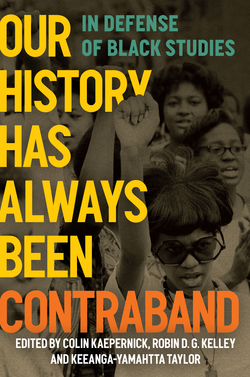
Edited by Colin Kaepernick, Robin D. G. Kelley, et al.
Edited by Keeanga-Yamahtta Taylor

by Anand Gopal, Owen Jones, et al.