An incisive critique of the Austrian School’s failure to reduce political economy to individual psychology by one of the foremost Soviet economists of the twentieth century.
Emphasising the sociological dimension of Marx’s work, Isaak I. Rubin welcomes a new “social direction” in the writings of Rudolf Stolzmann, Alfred Amonn and Franz Petry. These economists rejected Austrian individualism, but their works were often influenced by the ethical idealism of Kant and Hegel, resulting in detachment of the economy’s social form from the material process of production. Rubin critically explores methodological differences between Marx and early twentieth-century critics and proponents of marginalist economic theory.
Richard B. Day, is Professor of Political Economy at the University of Toronto, Canada. He has published extensively on Soviet economic and political history, including Leon Trotsky and the Politics of Economic Isolation (Cambridge, 1973).
Publication date: September 30, 2025
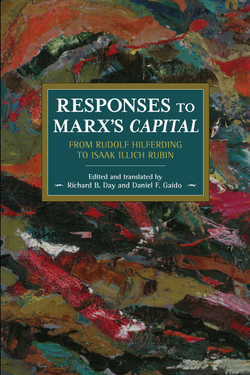
Edited and translated by Richard B. Day and Daniel F. Gaido
Edited and translated by Richard B. Day and Daniel F. Gaido
Edited and translated by Richard B. Day and Daniel F. Gaido