Forgiveness is necessary in the long fight for a just world—but it is only possible after the oppressed are victorious
For too long, revolutionary social movements have reconciled to defeat. We must start winning again. Forgiveness is a crucial strategy for remaking the world, to secure and sustain victories, to transform one-time enemies into friends.
With deep political commitment, D. K. Renton makes the case for forgiveness—but of a particularly unruly sort. Tracing the tragic abuse of Eleanor Marx and Jane Wells, the mistakes of the South African Truth and Reconciliation Commission, and the redemption of televangelist Tammy Faye, Renton urges us to forgive, but only after tearing down the citadels of the rich.
Revolutionary Forgiveness connects collective struggle with the individual’s search for justice to demand a better future for all—when the oppressed will be magnanimous in power, and even former oppressors will be free.
“Renton rescues ‘forgiveness' from the pulpit and returns it, bloodied but lucid, to history.”
—Richard Seymour, author of Disaster Nationalism
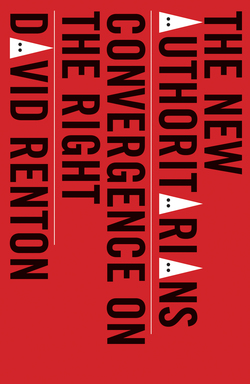
D. K. Renton is a barrister and historian. His work has appeared in The London Review of Books, The Guardian, Jacobin, Spectre, and Tempest. Renton is a member of rs21. His books include The New Authoritarians: Convergence on the Right and Fascism: History and Theory. He is based in London.
Publication date: May 12, 2026
INTRODUCTION
Presents the key argument of this book: that after successful revolutions, forgiveness presents the possibility to convert one-time enemies into friends and to make the victories of the oppressed more secure.
CHAPTER 1: ELEANOR MARX, JANE WELLS AND THE LIMITS OF FORGIVENESS
Traces the tragic story of two women, Eleanor Marx and Jane Wells, who were abused by their partners, and makes the case that forgiveness does not always heal or protect victims.
CHAPTER 2: SOUTH AFRICA, FORGIVENESS WITHOUT REPARATION
While representing a form of forgiveness, the Truth and Reconciliation Committee in South Africa is an example of partial and incomplete change: people are told to pardon but underlying structures of inequality are never addressed.
CHAPTER 3: LUKÁCS, INDIVIDUAL ETHICS AND SOCIAL CHANGE
Explores the relationship between politics and ethics, means and ends, through the writings of the celebrated Hungarian theorist György Lukács.
CHAPTER 4: MAGNANIMITY IN REVOLUTION
Renton reveals tensions in how revolutionaries have approached the relationship between politics and ethics, means and ends, through the example of the Bolshevik Revolution.
CHAPTER 5: HUGO, MARX AND THE CHARGE OF SENTIMENTALITY
Through Victor Hugo’s celebrated novel Les Misérables, Renton draws important lessons around the perils of moralism and the need for forgiveness in social movements.
CHAPTER 6: CRIME, PUNISHMENT, ABOLITION
Renton presents a brief history of the penal system in Britain, Europe and America, commenting on the role of forgiveness in the law, and why those on the left must always stand against carceral structures.
CHAPTER 7: WHO GETS TO PARDON A FASCIST?
Renton complicates the idea of forgiveness by looking at fascism, and presents the withholding of forgiveness as a legitimate choice.
CHAPTER 8: JEAN AMÉRY, RESENTMENT AS RESISTANCE
With great sensitivity, Renton critiques the writings of Holocaust survivor Jean Améry, who believed all forgiveness was nonsense, and desired a vigilant, ongoing hostility toward fascists and the culprits of genocide.
CHAPTER 9: AFTER ECOCIDE
A powerful argument for connecting forgiveness to reparations in the context of environmental destruction, and why forgiveness must always be connected to social revolution.
CHAPTER 10: THREE CASE STUDIES OF REVOLUTIONARY FORGIVENESS
Renton presents three brief case studies of revolutionary forgiveness, in an attempt to better understand how people seek forgiveness or grant it within a project of social change.
CHAPTER 11: RESENTMENT TO JUSTIFY OPPRESSION: MEIR KAHANE
Explores the life of Meir Kahane, the far-right politician whose admirers joined the Israeli cabinet in 2023, and reveals what happens when political movements are built around a project of militant non-forgiveness.
CHAPTER 12: FORGIVING AS A MEANS TO LIBERATE THE OPPRESSED
Renton closely reads Arendt and Fanon to make a final compelling case for what he terms revolutionary forgiveness, bearing in mind the ongoing genocide in Palestine.
CONCLUSION
A brief and moving call for revolution.
"Renton rescues ‘forgiveness' from the pulpit and returns it, bloodied but lucid, to history. With a barrister’s intolerance for cant and a socialist’s contempt for vicarious absolution, he searches the historical archives from Eleanor Marx to the South African compromise, from Javert’s chilly legalism to Fanon’s revolutionary humanism, and shows that mercy without justice is merely the alibi of the strong — but forgiveness with justice is radical realpolitik."
—Richard Seymour, author of Disaster Nationalism: The Downfall of Liberal Civilization
“How can the oppressed of the world forgive while colonial capitalism continues to kill? In this excellent book, David Renton shows that many theorists have failed in their thinking by placing forgiveness first. Instead, revolution must come first. Using compelling examples from apartheid South Africa, the Shoah, Israel-Palestine, and key touchpoints in socialist history, Renton explores what it would take for oppressed people to forgive their persecutors. What emerges is a portrait of the possibilities of healing, and a vision of forgiveness underpinned by radical social change.”
—Rabbi Lev Taylor, educator for the Queer Yeshiva
“Reading Renton will always teach you something new and valuable about the world.”
—Daniel Trilling, author of If We Tolerate This: How The British Establishment Made the Far Right Respectable
“This book is at once an insightful exploration of the politics of forgiveness and a passionate case for the interdependence of personal and social revolution. Too often, forgiveness becomes a substitute for social transformation; David Renton instead convinces us to recognise it as a necessary part of the repertoire and vocabulary of revolution.”
—Dan Swain, author of None So Fit to Break the Chains: Marx’s Ethics of Self-Emancipation
Praise for The New Authoritarians
"Renton is a stalwart of the anti-racist movement and his book is essential reading for anyone who wants to understand the changing nature of the right"
—Sasha Das Gupta, organiser, Momentum