
An interdisciplinary exploration of how Puerto Ricans imagine repair, recovery, and decolonial futures amid disaster, austerity, and colonial constraint
In the wake of hurricanes, earthquakes, and fiscal collapse, Puerto Ricans have confronted the limits of state-led reconstruction and the rise of post-disaster speculation. At the same time, they have forged new community-based experiments in self-governance, collective care, and imaginative practice. Post-Disaster Futures brings together scholars, artists, and activists to examine how disaster recovery can both reinforce existing hierarchies of power and open pathways toward transformation.
Moving between the archipelago and its diaspora, the volume traces a collective effort to rethink what repair means when the very institutions of recovery and governance perpetuate the damage they claim to fix. Through essays, interviews, poetry, and conversations, contributors explore themes ranging from energy justice and housing displacement to memory, migration, and artistic practice. They show how the ruins of colonial modernity—its failed infrastructures and broken promises—can be sources of solidarity and imagination.
Contributors include: Elizabeth Aranda, Alvin Padilla–Babilonia, Raúl Santiago Bartolomei, Yarimar Bonilla. Mikey Cordero, Rafael V. Capó García, Mercedes Trelles Hernández, Mónica A. Jiménez, Natalia Lassalle–Morillo, Marcelo López–Dinardi, Bettina Pérez Martínez, Edgardo, Miranda–Rodríguez, Sarah Molinari, Ed Morales, Juan Carlos Rodríguez Rivera, Erika P. Rodríguez, Michael Rodríguez–Muñiz, Isabel Guzzardo Tamargo, Ana Teresa Toro, Fernando Tormos–Aponte, Érika Fontánez Torres.
Yarimar Bonilla is a political anthropologist, professor, and contributing writer to the New York Times. Both an accomplished scholar and a prominent public intellectual, Yarimar is a leading voice on questions of Caribbean and Latinx politics. She is a regular columnist in the Puerto Rican newspaper El Nuevo Día and a frequent contributor to publications such as The Washington Post, The Nation, and The New Yorker. Bonilla is a professor in the Effron Center for the Study of America at Princeton University. Her website is https://yarimarbonilla.com.
Publication date: November 17, 2026
Introduction
Part I
Chapter 1: David vs Goliath
A look at the origins of Silicon Valley, its political culture, the roots of the Californian ideology, and how some of the best-paid workers in the country began to fight for their rights.
Chapter 2: Wielding Public Pressure
At the start of the tech workers movement most of the participants continued to hold the idea that their bosses were on their side, and so their early tactics were about public appeals to the better nature of individual executives. This chapter looks at that phase of the struggle.
Chapter 3: The Walkout
The first cracks in this idea of industry wide progressivism developed during the Google walkout, which saw thousands of workers across the world leave their keyboards and march against their company’s acceptance of military / DHS contracts. This initial action then sparked a series of copycats
Part II
Chapter 4: Winning a Union
As the facade of well-meaning executives and “do no evil” slogans began to flake away, one set of tech workers decided to take a drastic new measure: forming a union. This chapter follows the story of the first wall-to-wall union in the industry, at Kickstarter.
Chapter 5: The Fight for Recognition
Following the success at Kickstarter, tech workers across the country begin to emulate their strategy and start collecting union cards in campaigns for recognition. This chapter critically reflects on the classic tactics and strategies used and whether they truly were a fit for the conditions of work in the tech industry.
Chapter 6: Billionaire Class Consciousness
As workers began to ask for collective bargaining agreements and other workplace rights, their bosses responded with either dismissal of their demands or outright hostility. Chapter 6 looks at factors that allowed for the industry’s progressive veneer to develop in the first place (years and years of zero interest rates / free money) and how that mask began to crack under pressure.
Part III
Chapter 7: The Takeover
Just weeks before Elon Musk assumed control of Twitter, workers at the social media firm went public with their intention to organize what would have been the single largest tech workers local to date. This chapter tells the tragic story of that campaign and what Musk’s scorched earth response can teach us about the nature of labor power in the tech industry.
Chapter 8: The Perils of Delayed Class Conflict
Following the devastating defeat of the Twitter campaign, JS and Clarissa—who were its lead organizers—take stock of what went wrong and make the case that one of the major shortcomings can be found in some of the most basic assumptions of the traditional union movement.
Chapter 9: The Strike
This chapter follows another inspiring but ultimately unsuccessful (or at least only partially successful) effort: the first tech-worker strike by New York Times tech workers. While the organizing was solid, and the support for their cause widespread, the workers failed to realize that when they downed tools the code they’d built would just keep on running, undermining their leverage.
Conclusion
“This volume invites readers to participate in the speculative labor of Borifuturism no matter where they call home. It invites us to collectively imagine a post-disaster future where displacement is not a permanent threat, where rights are protected, where cultural memory is a valued resource, and where families are not divided by imperial borders. It does not offer a blueprint or guarantee—only an opening, a proposition, a glimpse at what might be possible if we dare to imagine otherwise.” —from the Introduction by Yarimar Bonilla

Edited by Yarimar Bonilla and Marisol LeBrón
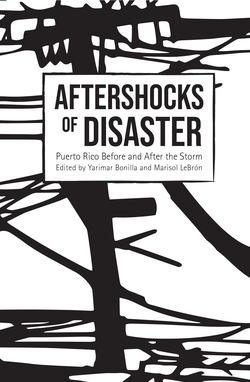
Edited by Yarimar Bonilla and Marisol LeBrón