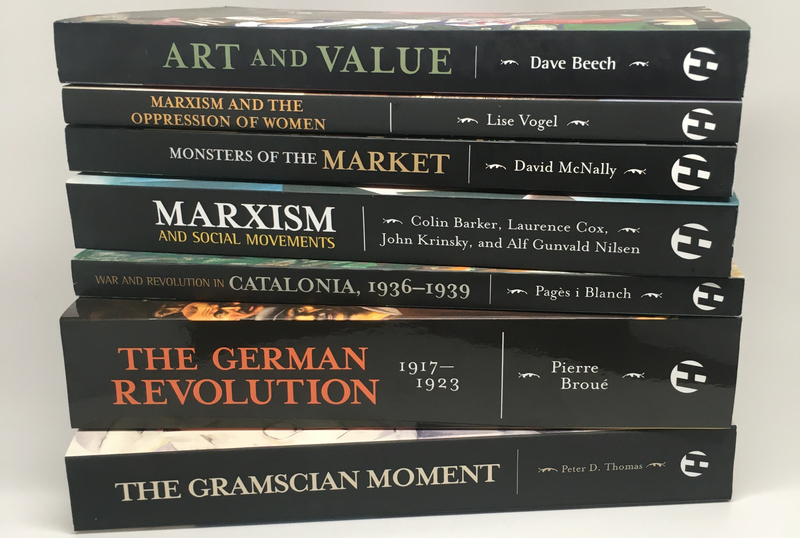
"What makes Peter D. Thomas's book an important one is, first and foremost, the fact that it takes Gramsci's thought beyond Italy and makes it accessible to a global audience, and in particular to an Anglophone one. Thomas's work explicitly aims to open the debate on Gramsci within Anglo-Saxon Marxism, which is today a key site for the elaboration of Marxist philosophy. There is no need to add that in pursuing this aim, he develops a reading of Gramsci that is not only informed by the renewal of scholarship seen in the wake of the publication of the complete Prison Notebooks and of Gramsci's letters during the mid-1970s, but that also addresses - and is enriched by the confrontation with - those major authors (Althusser and Anderson) who have, so to speak, represented the experientia crucis of Gramsci's introduction to the Atlantic world.... It is worth pointing out in passing that this book reproduces, with the intensity and meticulousness of its argumentation, the great German and Russian Marxological tradition - which confirms its scientific value....Thomas's analysis of the concept of 'hegemony' is no less powerful and comprehensive."
Antonio Negri
This should become the standard text in English on Gramsci's thought. Acquainted with the latest wrinkle in the Italian debate, Thomas deftly overturns the received orthodoxy and the various abuses of the ideas of the Marxist militant, both restoring Gramsci's work to its true status and opening up fruitful possibilities for understanding his contribution to political theory more generally. The best book on Gramsci's political theory for three decades.”
Alastair Davidson, Author of Antonio Gramsci: Towards an Intellectual Biography
Thomas's Gramsci is the one we need in an era of economic and geopolitical crises that bears some resemblances to Gramsci's own time. This Gramsci is no incipient post-Marxist. Thomas's Gramsci, developed from rigorous critical study of the Prison Notebooks and of the now extensive scholarly literature, is a deeply consequent thinker intent on reconstructing revolutionary Marxism in opposition to the most advanced bourgeois thought of his day. This is also a Gramsci for whom political economy is of central methodological and substantive significance...This is a book that will recast the understanding of Gramsci, especially but not exclusively in the Anglophone world.”
Alex Callinicos, Professor of European Studies, Social Theory and International Political Economy, King's College, London
The Gramscian Moment demonstrates the extent to which Gramsci’s thought represents a singular synthesis of virtually the entire tradition of Western political thought. This work succeeds in presenting Gramsci as a 'living classic', an author central to our understanding of modernity. Given its scope, richness and originality, I have no doubt that this work will represent a milestone in Gramscian scholarship and an important contribution to contemporary debates in political theory and philosophy.”
Stathis Kouvelakis, Author of Philosophy and Revolution and Co-editor of The Critical Companion to Contemporary Marxism
The Gramscian Moment is the most thorough and illuminating philosophical study of Gramsci yet to appear in English. It sets a new standard for work not only on Gramsci himself but on the whole complex of issues associated with his legacy on the mechanics and dimensions of hegemony, on the role and nature of the subject of political action, on the relation between theory and practice, and between civil society and the state. Thomas does more than any previous reader of Gramsci to demonstrate how his philosophy can fairly claim to meet Marx's famous prescription not merely to interpret the world but to change it’”.
Peter Hallward author of Damming the Flood: Haiti, Aristide and the Politics of Containment
Terms like outstanding,’ superb’ and tour-de-force’ suggest themselves, but even these do not fully capture the extraordinary power of The Gramscian Moment. Thomas’s erudite and staggeringly sophisticated reading of Gramsci’s Prison Notebooks completely overturns the dominant interpretations including those of Louis Althusser and Perry Anderson. Never again will we be able to read Gramsci solely through their lenses. Henceforth, Thomas’s magisterial exploration of Gramsci’s thought will become the critical point of reference for all serious work in the field. But Thomas does more than meticulous exegesis. He also insists on the actuality of Gramsci’s work, urging that we approach it in the spirit of both continuation and transformation, fidelity and renewal”. He succeeds brilliantly on all counts.”
David McNally, Professor of Political Science, York University, Toronto
Although there have been important readings of Gramsci’s elaborations on questions of Marxist philosophy Gramsci’s work has been more often read in relation to questions of cultural production and political theory. Contrary to this tendency, Peter Thomas has written a book that attempts to offer a new reading of Gramsci that highlights its usefulness for the renewal of Marxist philosophical research Thomas’ book is impressive in the scope and depth of its argument”
Panagiotis Sotiris, Science and Society
"Persistent readers will find in The Gramscian Moment a fresh and rewarding critical study of Gramsci’s thought, combining a deep familiarity with the contemporary currents of Gramscian studies with his own rigorous philological research. The Gramscian Moment calls into question previous dominant interpretations of Gramsci’s thought and is well positioned to stand as a new standard alongside them. However, The Gramscian Moment builds on the premise that it is necessary to reassert a Marxist philosophical presence in Gramsci on the basis of inferior’ alternative readings."
Alexander Otruba , Critique: The Journal of Socialist Theory
"What makes Peter D. Thomas's book an important one is, first and foremost, the fact that it takes Gramsci's thought beyond Italy and makes it accessible to a global audience, and in particular to an Anglophone one. Thomas's work explicitly aims to open the debate on Gramsci within Anglo-Saxon Marxism, which is today a key site for the elaboration of Marxist philosophy. There is no need to add that in pursuing this aim, he develops a reading of Gramsci that is not only informed by the renewal of scholarship seen in the wake of the publication of the complete Prison Notebooks and of Gramsci's letters during the mid-1970s, but that also addresses - and is enriched by the confrontation with - those major authors (Althusser and Anderson) who have, so to speak, represented the experientia crucis of Gramsci's introduction to the Atlantic world.... It is worth pointing out in passing that this book reproduces, with the intensity and meticulousness of its argumentation, the great German and Russian Marxological tradition - which confirms its scientific value....Thomas's analysis of the concept of 'hegemony' is no less powerful and comprehensive."
—Antonio Negri
“This should become the standard text in English on Gramsci's thought. Acquainted with the latest wrinkle in the Italian debate, Thomas…deftly overturns the received orthodoxy and the various abuses of the ideas of the Marxist militant, both restoring Gramsci's work to its true status and opening up fruitful possibilities for understanding his contribution to political theory more generally. The best book on Gramsci's political theory for three decades.”
—Alastair Davidson, Author of Antonio Gramsci: Towards an Intellectual Biography
“Thomas's Gramsci is the one we need in an era of economic and geopolitical crises that bears some resemblances to Gramsci's own time. This Gramsci is no incipient post-Marxist. Thomas's Gramsci, developed from rigorous critical study of the Prison Notebooks and of the now extensive scholarly literature, is a deeply consequent thinker intent on reconstructing revolutionary Marxism in opposition to the most advanced bourgeois thought of his day. This is also a Gramsci for whom political economy is of central methodological and substantive significance...This is a book that will recast the understanding of Gramsci, especially but not exclusively in the Anglophone world.”
—Alex Callinicos, Professor of European Studies, Social Theory and International Political Economy, King's College, London
“The Gramscian Moment demonstrates the extent to which Gramsci’s thought represents a singular synthesis of virtually the entire tradition of Western political thought. This work succeeds in presenting Gramsci as a 'living classic', an author central to our understanding of modernity. Given its scope, richness and originality, I have no doubt that this work will represent a milestone in Gramscian scholarship and an important contribution to contemporary debates in political theory and philosophy.”
—Stathis Kouvelakis, Author of Philosophy and Revolution and Co-editor of The Critical Companion to Contemporary Marxism
“The Gramscian Moment is the most thorough and illuminating philosophical study of Gramsci yet to appear in English. It sets a new standard for work not only on Gramsci himself but on the whole complex of issues associated with his legacy – on the mechanics and dimensions of hegemony, on the role and nature of the subject of political action, on the relation between theory and practice, and between civil society and the state. Thomas does more than any previous reader of Gramsci to demonstrate how his philosophy can fairly claim to meet Marx's famous prescription – not merely ‘to interpret the world but to change it’”.
—Peter Hallward author of Damming the Flood: Haiti, Aristide and the Politics of Containment
“Terms like ‘outstanding,’ ‘superb’ and ‘tour-de-force’ suggest themselves, but even these do not fully capture the extraordinary power of The Gramscian Moment. Thomas’s erudite and staggeringly sophisticated reading of Gramsci’s Prison Notebooks completely overturns the dominant interpretations including those of Louis Althusser and Perry Anderson. Never again will we be able to read Gramsci solely through their lenses. Henceforth, Thomas’s magisterial exploration of Gramsci’s thought will become the critical point of reference for all serious work in the field. But Thomas does more than meticulous exegesis. He also insists on the actuality of Gramsci’s work, urging that we approach it in the spirit of “both continuation and transformation, fidelity and renewal”. He succeeds brilliantly on all counts.”
—David McNally, Professor of Political Science, York University, Toronto
“Although there have been important readings of Gramsci’s elaborations on questions of Marxist philosophy … Gramsci’s work has been more often read in relation to questions of cultural production and political theory. Contrary to this tendency, Peter Thomas has written a book that attempts to offer a new reading of Gramsci that highlights its usefulness for the renewal of Marxist philosophical research … Thomas’ book is impressive in the scope and depth of its argument”
—Panagiotis Sotiris, Science and Society
"Persistent readers will find in The Gramscian Moment a fresh and rewarding critical study of Gramsci’s thought, combining a deep familiarity with the contemporary currents of Gramscian studies with his own rigorous philological research. The Gramscian Moment calls into question previous dominant interpretations of Gramsci’s thought and is well positioned to stand as a new standard alongside them. However, The Gramscian Moment builds on the premise that it is necessary to reassert a Marxist philosophical presence in Gramsci on the basis of ‘inferior’ alternative readings."
—Alexander Otruba , Critique: The Journal of Socialist Theory