A provocative analysis of the deadly Cold War conflicts that devastated countries and communities far from Moscow and Washington
Transforming battlegrounds in Africa, Asia, and Latin America into veritable hellscapes, the surrogate wars of the Cold War era left behind a legacy of collective trauma and social conflict that have persisted into the present. In this ambitious work, Alfred W. McCoy uses a bottom-up, outside-in approach to offer an unexpected new perspective on the longest, most consequential conflict in modern history.
McCoy renders an intimate portrait of both embattled covert operatives and committed antiwar protesters, thus humanizing the history of the Cold War—a history that has too often been told in impersonal terms of economic growth, nuclear arsenals, or diplomatic ententes.
As today’s great powers devote humanity’s scarce resources toward ratcheting up a “new cold war” in the face of a worsening climate crisis, McCoy’s history is an important reminder that otherwise- ordinary individuals once helped end a global conflict that threatened nuclear holocaust.
Alfred W. McCoy holds the Harrington Chair in History at the University of Wisconsin-Madison. After earning his Ph.D. in Southeast Asian history at Yale in 1977, his writing has focused on Philippine political history, the history of modern empires, and the covert netherworld of illicit drugs, syndicate crime, and state security.
His first book, The Politics of Heroin in Southeast Asia (1972), sparked controversy over the CIA’s attempt to block its publication. But it is now regarded as the “classic” study of global drug trafficking, translated into nine languages and remaining in print continuously for nearly 50 years. His book A Question of Torture: CIA Interrogation, From the Cold War to the War on Terror (2006) provided the historical dimension for the Oscar-winning documentary feature, Taxi to the Darkside.
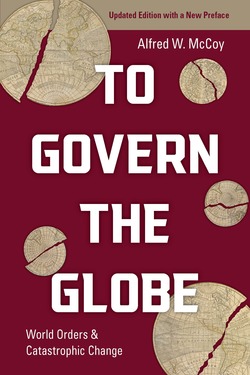
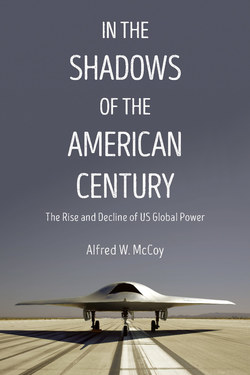
McCoy's book, Policing America’s Empire: The United States, the Philippines, and the Rise of the Surveillance State (2009), was the winner of the Kahin Prize from the Association for Asian Studies, explores the pervasive influence of internal security in these two states. He is also the author of In the Shadows of the American Empire: The Rise and Decline of US Global Power (2017). His latest book, To Govern the Globe: World Order and Catastrophic Change (2021), charts the succession of world empires from the Black Death of 1350 through the coming climate crisis of 2050.
His books on the Philippines have won that country’s National Book Award (1985, 1995, 2001), as well as the Goodman Prize (2001) from the Association for Asian Studies. His scholarship has been recognized by the Wilbur Cross Medal from Yale University and the Hilldale Award for Arts & Humanities from the University of Wisconsin-Madison (2012).
Publication date: January 6, 2026
Chapter 1: The Cold War’s Long Shadow
Part One: Struggle Over Europe and Its Colonial Empires
Chapter 2: USA vs. USSR
Chapter 3: Europe—Cockpit of Conflict
Chapter 4: Fighting Communism in Southeast Asia
Chapter 5: War in Korea
Chapter 6: End of Empire in the Middle East
Chapter 7: Covert Action in the Caribbean
Chapter 8: Cold War Comes to Africa
Part Two: One, Two, Many Vietnams
Chapter 9: The Vietnam War
Chapter 10: Jakarta Is Coming
Chapter 11: CIA Coup in Chile
Part Three: Surrogate Wars in the Third World
Chapter 12: Struggle for Southern Africa
Chapter 13: Civil Wars in Central America
Chapter 14: Afghanistan’s Imperial Graveyard
Part Four: Close of the Cold War
Chapter 15: Collapse of the Soviet Empire
Chapter 16: Toward a New Cold War
Acknowledgments
Appendix: Men on the Spot, Cold War, 1946–1991
"The history of the Cold War is often told with a focus on the United States and Europe, but in this monumental recasting of the era, historian Alfred W. McCoy spotlights the “surrogate wars” that devastated countries in Africa, Asia, and Latin America after World War II, reassessing the period as talk of a new cold war gains steam." —Foreign Policy, The Most Anticipated Books of the Year
"Cold War on Five Continents is the culmination of a lifetime of research, analysis and writing that began in the early 1970s when the author wrote, The Politics of Heroin, which the CIA tried and failed to kill. In an age like ours when publishers, editors and reporters bow down before the authorities and authority, Alfred McCoy proves he’s once again an American journalist who has mapped the road that the cold warriors have paved with the blood and the bones of humanity and who shows us where we need to go now to survive." —CounterPunch
“Alfred W. McCoy continues his indispensable role as a guide through the shadow side of U.S. empire. His most recent book, Cold War on Five Continents: A Global History of Empire and Espionage, should force us to rethink the postwar period, a sweeping, magisterial, and humane vision of how superpower rivalry was fundamentally a covert op and a psych war, and, in a way, a prelude to our current state of confusion. A tour de force. “
—Greg Grandin, author, America, América: A New History of the New World
"A masterful account of conflict of every sort in almost every imaginable place. Alfred McCoy's history of the Cold War is a must-read." —John Dower
"McCoy’s gift lies in giving us faces, voices, and decisions—Edward Lansdale fine-tuning propaganda and political theatre in Manila and Saigon; Kermit Roosevelt Jr., in a haze of charm and calculation, extracting a dynasty’s return from Tehran; Roger Trinquier, whose chillingly lucid writings etched into military doctrine the apparatus of torture; Norman Reddaway, whose quiet British psychological war in Indonesia abetted cataclysmic purges; Pham Xuan An, a reporter whose public role concealed a clandestine craft that shadowed American efforts in Vietnam. These figures, arrayed across continents and crises, press against the abstract contours of geopolitics and force history to turn." —The Cipher Brief
“Sweeping, vivid, and provocative, Alfred McCoy has proven once again that few are his match when it comes to taking a probing, wide-angled lens to the troubles of our time. Cold War on Five Continents manages to span the globe and half a dozen decades, peopling that history with lively figures and showing the larger patterns their roles fit into. An impressive achievement.” —Adam Hochschild, author of King Leopold’s Ghost
"While politicians pose for photos and speechify, actions by "the man on the spot" determine the fate of nations and empires. Alfred McCoy's compelling narrative describes the handiwork of the arrogant and eccentric oddballs who played pivotal roles during key moments of the Cold War and after. A brilliant, instructive, and deeply disturbing book." —Andrew Bacevich, founder of the Quincy Institute and author of America’s War for the Greater Middle East.
"McCoy's monumental achievement, carefully grounded in archives and primary accounts, lays bare the global desolation that attended the U.S.-Soviet proxy wars during the Cold War, with millions killed and tens of millions driven into longlasting poverty. Gimlet-eyed and searingly honest, it lays bare the true cost of letting ideology drive policy." —Juan Cole, Richard P. Mitchell Collegiate Professor of History, University of Michigan
"Cold War on Five Continents is a revelatory and gripping saga of global conflict. Distinguished historian Alfred McCoy melds the big picture of Superpower rivalry with narratives of "men on the spot"—covert operatives who carried the struggle to the corners of the earth. McCoy deftly explicates how human agency as well as geopolitics defined the Cold War. The book should be the standard text in university courses to inform new generations about an era that cost 20 million lives. It should also be read in the halls of power to remind political leaders of the dangers of embracing a new Cold War." —Derek Shearer, former US ambassador to Finland, Chevalier professor of Diplomacy, Occidental College
Praise for To Govern the Globe:
"An ambitious effort to discern patterns in the rise and fall of world empires.... McCoy’s account is compelling...with many provocative observations on world history and its present twists." —Kirkus
"To Govern the Globe is a brilliant distillation of 700 years of geopolitics, exposing how we arrived where we are, amidst the worsening climate crisis and collapsing world orders. Al McCoy’s eloquently written book is a call to action for us all, as time still remains to prevent an unprecedented cascade of catastrophes."
—Amy Goodman, host of Democracy Now!
"McCoy is one of the most eminent scholars in the world on the abuse of power and authority, on surveillance and repression, on the historical evolution of state-sanctioned torture in the US and elsewhere, and, more recently, on the rapidly declining state of the US empire.”
—Jeremy Scahill, investigative journalist and author of Blackwater and Dirty Wars
“To Govern the Globe ... offers a kaleidoscopic and timely analysis of the present US decline, contextualizing it among a succession of empires and world orders across the past millennium.” —Counterpunch
“In an age where most scholars concentrate on a limited specialty, no one sees a bigger picture more brilliantly than Alfred McCoy. In this powerful, enlightening, and frightening book he gives us a magisterial view of the empires of the past—and of the force in our future which promises to dwarf them all.”
—Adam Hochschild, author of King Leopold's Ghost
“To Govern the Globe is history on an epic scale—sweeping, provocative, and unsparing in its judgments. Alfred McCoy's immensely readable narrative spans centuries, charting the rise and fall of successive world orders down to our own present moment shaped by China’s emergence as a great power and the blight of climate change.”
—Andrew Bacevich, author of After the Apocalypse: America's Role in a World Transformed