
The Responsibility of Intellectuals in the Age of Fascism and Genocide is Boston Review’s 50th anniversary issue. This milestone issue features many of our longtime contributors, including Robin D. G. Kelley, Vivian Gornick, and Elaine Scarry, and celebrates classics from our archive. In this issue, historian and Boston Review contributing editor Robin D. G. Kelley revisits Noam Chomsky’s landmark 1967 essay, “The Responsibility of Intellectuals,” published near the height of the Vietnam War. The essay’s dissident injunction—that those in privileged positions have a duty to “speak the truth and expose lies”—remains a powerful call to conscience, Kelley argues, but the anti-fascist and anti-colonial struggles of even earlier decades reveal its limits, and they show how to refuse and resist complicity in our own age of fascism and genocide. Political philosopher Martin O’Neill, Palestinian human rights lawyer Jennifer Zacharia, and historian David Waldstreicher expand on what this moment requires—of intellectuals, of journalists, and of us all.
Also in the issue, Vivian Gornick reviews Shulamith Firestone’s Airless Spaces, Elaine Scarry challenges the wisdom that Plato banished the poets, Brandon M. Terry interviews political scientist Cathy Cohen about social movements and the future of Black politics, Joelle M. Abi-Rached exposes the contradictions of the liberal international order over Gaza, Samuel Hayim Brody reviews three memoirs on the Arab Jewish world destroyed by colonialism, David Austin Walsh explains what Zohran Mamdani’s triumph means for the future of the Democratic Party, and Sandeep Vaheesan looks to the New Deal to assess the “abundance” agenda.
Plus, seven writers reflect on notable essays from our archive in a special anniversary feature:
Vivian Gornick’s most recent book is Taking a Long Look: Essays on Culture, Literature, and Feminism in Our Time.
Robin D. G. Kelley is Professor and Gary B. Nash Endowed Chair in U.S. History at UCLA. He is the author of Hammer and Hoe, Race Rebels, Freedom Dreams: The Black Radical Imagination, and Thelonious Monk: The Life and Times of an American Original, among other titles. His writing has been featured in the Journal of American History, American Historical Review, Black Music Research Journal, African Studies Review, New York Times, The Crisis, The Nation, and Voice Literary Supplement.
Elaine Scarry is Walter M. Cabot Professor of Aesthetics and General Theory of Value at Harvard University.
Publication date: October 7, 2025
“These are important pieces that shine a light on some of the most uncomfortable truths about our country. And as Chomsky himself has recognized, it’s hard to think of a magazine other than Boston Review that would have published them.” —Nathan J. Robinson, editor of Current Afairs
“It’s timely and rigorous work like this that makes Boston Review indispensable.” —Naomi Klein, activist and author of The Shock Doctrine: The Rise of Disaster Capitalism
“ Both the article and the responses exemplify what Boston Review does best, fostering debate that connects theory with real-world political challenges, speaking across divides, showing us that one does not need to sacrifice philosophical rigor to deliver sound policy advice.” —Lea Ypi, political theorist and author of Free: Coming of Age at the End of History
by Rana Aziz, Vivian Gornick, et al.
by Noura Erakat, Robin D. G. Kelley, et al.
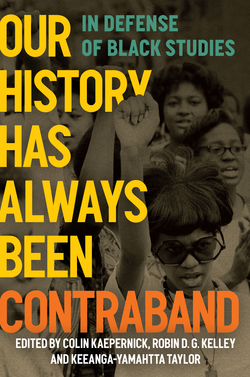
Edited by Colin Kaepernick, Robin D. G. Kelley, et al.