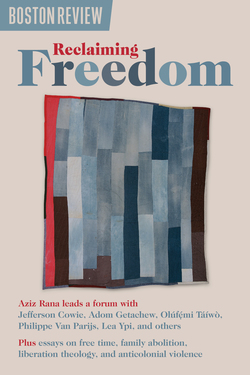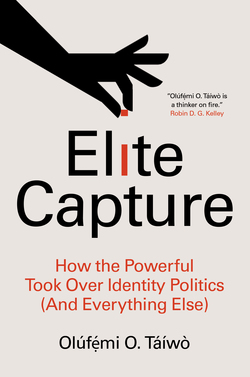
In Boston Review’s new issue Brute Force and Plunder, Aslı Ü. Bâli and Aziz Rana trace the path to the Trump doctrine through U.S. coercion in the Middle East, Gerald Epstein examines the crypto coalition’s plan, and Vivian Gornick revisits a childhood memoir from Nazi Germany.
Also in this issue:
On ICE: Robin D. G. Kelley puts terror tactics in context, Liv Veazey covers the Canal Street raids, and Joshua Craze reports from immigration court
Adam Bonica and Jake Grumbach unpack Democrats’ timidity in the face of authoritarianism
Photographer Salih Basheer documents loss and displacement in Sudan
Benjamin Balthaser reviews historian Mark Mazower’s On Antisemitism
Plus columns by Olúfẹ́mi O. Táíwò and David Austin Walsh; fiction from Emmett Rensin; and a special 50th anniversary archive feature with introductions from George Scialabba, Jeet Heer, Junot Díaz, Jessie Kindig, Daniel Denvir, Pankaj Mishra, and Katrina vanden Heuvel.
Vivian Gornick’s most recent book is Taking a Long Look: Essays on Culture, Literature, and Feminism in Our Time.
Robin D. G. Kelley is Professor and Gary B. Nash Endowed Chair in U.S. History at UCLA. He is the author of Hammer and Hoe, Race Rebels, Freedom Dreams: The Black Radical Imagination, and Thelonious Monk: The Life and Times of an American Original, among other titles. His writing has been featured in the Journal of American History, American Historical Review, Black Music Research Journal, African Studies Review, New York Times, The Crisis, The Nation, and Voice Literary Supplement.
Olúfẹ́mi O. Táíwò is Associate Professor of Philosophy at Georgetown University. He received his Ph.D. in philosophy at the University of California Los Angeles. He has published in academic journals ranging from Public Affairs Quarterly, One Earth, Philosophical Papers, and the American Philosophical Association newsletter Philosophy and the Black Experience.
Táíwò’s theoretical work draws liberally from the Black radical tradition, anti-colonial thought, German transcendental philosophy, contemporary philosophy of language, contemporary social science, and histories of activism and activist thinkers.
His public philosophy, including articles exploring intersections of climate justice and colonialism, has been featured in The New Yorker, The Nation, Boston Review, Dissent, The Appeal, Slate, Al Jazeera, The New Republic, Aeon, and Foreign Policy.
He is the author of the book Reconsidering Reparations, published by Oxford University Press.
Publication date: April 30, 2026
“Boston Review is unique and simply indispensable in its dignified refusal to phrase essential critiques in vague or sentimental pieties.”
—Pankaj Mishra, essayist and novelist on A. Dirk Moses’s essay “More than Genocide”
“Like the best Boston Review essays, Hogeland’s counternarrative is work of brisk, common-sense radicalism. It presciently outlined the contours of the new elite ideology of militaristic plutocracy that disguised itself as a national origin story of democratic meritocracy.”
—Jeet Heer, national affairs correspondent for The Nation on William Hogeland’s essay “Inventing Alexander Hamilton”
“We need essays like this, and magazines like Boston Review, to see through the self-serving narratives of the powerful and expose the injustice that so many insist on obscuring.”
—Daniel Denvir, writer and host of The Dig on Harsha Walia’s essay “There Is No ‘Migrant Crisis’”
by Noura Erakat, Robin D. G. Kelley, et al.
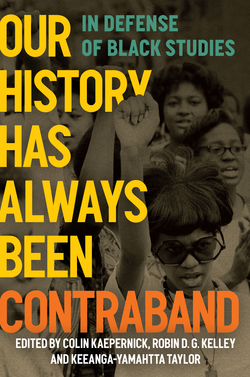
Edited by Colin Kaepernick, Robin D. G. Kelley, et al.